Buying new equipment or software does not necessarily mean your factory is ready for digital transformation. A SIRI assessment identifies what your factory is missing, which areas should be developed first, and where further spending may not be necessary. With Automera’s team of Certified SIRI Assessors, you can understand your factory’s actual needs and direct your development budget to the right priorities.
What is a SIRI Assessment for Manufacturers?
The Smart Industry Readiness Index (SIRI) is a global framework used to assess a factory’s readiness for Industry 4.0 and smart manufacturing. It measures digital maturity across processes, technology, and organisation, including the factory’s ability to adopt automation, the Industrial Internet of Things (IIoT), and data analytics. The results show the factory’s current position and help define a structured path for digital transformation.
Why is an Official SIRI Assessment Important for Manufacturers?
Before spending on digital transformation technologies, manufacturers need to understand their actual level of readiness and identify the gaps that may prevent them from progressing towards Industry 4.0. A SIRI assessment gives management a structured view of the factory’s current position, allowing decisions to be based on evidence instead of assumptions or disconnected technology projects.
Measuring the Factory’s Digital Maturity
SIRI measures the factory’s maturity across 16 dimensions covering processes, technology, and organisation. This allows management to see which areas are performing well and which still require development.
Identifying Digital Transformation Gaps
A SIRI assessment provides more than a general maturity score. It identifies specific areas that need improvement, including system and process integration, automation, connectivity, and intelligence. The results give the factory a clear view of the gaps affecting its digital progress.
Setting Industry 4.0 Priorities
The SIRI framework links potential improvements to cost, key performance indicators, and the factory’s business objectives. This helps management decide which areas should receive attention first and direct resources towards projects with the greatest expected impact.
Understanding the Factory’s Digital Readiness
SIRI uses benchmarking to show how the factory compares with similar manufacturing facilities. This gives management a more objective view of its digital maturity and its progress towards smart manufacturing.
Building a Digital Transformation Roadmap
The assessment results show what the factory should develop next. They can be used to create a prioritised transformation roadmap, instead of launching separate digital projects that are not connected to the factory’s actual needs and objectives.
Supporting Management and Strategic Decisions
A structured maturity assessment makes it easier for management to connect decisions about technology, automation, and operational development with the factory’s business goals. SIRI provides the information needed to identify development opportunities and plan the factory’s next steps.
Who Needs a SIRI Assessment?
A SIRI assessment is suitable for manufacturers that are preparing to begin their Industry 4.0 transformation, as well as factories that have already started but need to confirm whether they are moving in the right direction. It is especially useful when:
- The factory plans to purchase new equipment or digital systems.
- Development priorities are unclear.
- Production lines are not properly connected to management systems.
- Digital projects have been implemented without delivering clear results.
- The company operates several factories and needs to compare their readiness levels.
- Management wants to benchmark the factory against similar facilities in the same industry.
What is the SIRI Framework?
SIRI assesses a factory through three connected building blocks: process, technology, and organisation. A Certified SIRI Assessor reviews how work is carried out, how systems and technologies are used, and whether the factory’s teams are prepared to manage digital transformation. The results show the current maturity level in each area and identify gaps affecting the factory’s readiness for Industry 4.0.
What are the Main Components of a SIRI Assessment?
As mentioned earlier, SIRI is built around three main building blocks: process, technology, and organisation. Each building block is divided into pillars and dimensions that allow the factory’s readiness to be assessed in greater detail:
- Process: This building block includes three pillars: operations, supply chain, and product lifecycle. It examines integration between factory departments, connections with suppliers and customers, and the movement of product data across design, production, and service.
- Technology: This building block covers automation, connectivity, and intelligence across the shop floor, enterprise systems, and facility. It examines how equipment and systems are connected and how the factory collects, analyses, and uses data in its operations.
- Organisation: This building block focuses on talent readiness and structure and management. It covers workforce learning and development, leadership competency, collaboration within the company and with external partners, as well as strategy and governance.
The SIRI framework consists of 8 pillars and 16 dimensions, allowing the maturity of each area to be assessed separately instead of giving the factory a single general score.
What Areas Does a SIRI Assessment Evaluate?
SIRI evaluates 16 dimensions to build a detailed picture of the factory’s readiness. The main areas include:
- Integration between processes within the factory.
- Connectivity with suppliers and customers.
- Management of product data throughout its lifecycle.
- Automation across production lines, enterprise systems, and facilities.
- The ability of machines and software to connect and exchange data.
- The use of data for analysis and better decision-making.
- Workforce learning and skills development.
- Leadership readiness to manage transformation.
- Collaboration within the company and with external partners.
- Strategy and governance.
Some technology areas are assessed separately at the shop-floor, enterprise, and facility levels, bringing the total to 16 dimensions within the official SIRI framework.
Stages of the SIRI Assessment Process
The SIRI assessment process can be divided into four stages, beginning with factory preparation and ending with the selection of development priorities.
1. Planning and Preparation
The Certified SIRI Assessor defines the scope and objectives of the assessment. The factory selects representatives from relevant departments, such as production, maintenance, quality, information technology, and management. The team also prepares the required data and documents and completes an initial questionnaire before the on-site visit.
2. On-Site Visit
The assessor usually spends two to three days at the factory. During the visit, the assessor observes production activities, examines equipment, systems, and the existing technology infrastructure, and interviews employees and managers to ensure the assessment reflects the factory’s actual operating conditions.
3. Scoring and Benchmarking
The assessor evaluates the factory across the 16 SIRI dimensions within process, technology, and organisation. Each dimension receives a maturity score from 0 to 5. The results are then compared with similar facilities based on industry, region, and size to provide a relevant benchmark.
4. Setting Priorities and Preparing the Development Roadmap
The results reveal the gaps between the factory’s current maturity level and its target position. Using the Prioritisation Matrix, the assessor identifies the areas with the greatest impact on cost, performance, and business objectives. The factory then receives a final report and a development roadmap showing where to begin and how improvement actions should be prioritised.
How Long Does a Smart Industry Readiness Index “SIRI“ Take?
The duration depends on the factory’s size, the number of sites, and the assessment scope. The on-site visit usually takes two to three days, while preparation and data collection may begin three to four weeks earlier. After the assessment, the assessor discusses the findings with management and delivers the assessment report and proposed development roadmap.
What Are the Benefits of Conducting a SIRI Assessment?
After the assessment, the factory receives a clear set of results showing its current position, including:
- A maturity score for each of the 16 SIRI dimensions.
- A report identifying strengths and gaps across process, technology, and organisation.
- A comparison with similar factories in the same industry and size category.
- A list of areas that should be developed first.
- An analysis of workforce and management readiness for digital transformation.
- A development roadmap based on the factory’s needs and objectives.
- A baseline that can be used to measure progress in future assessments.
SIRI Maturity Levels for Factories
Siri index determines the factory’s maturity level separately for each dimension within process, technology, and organisation. A factory may therefore achieve a high level in automation while receiving a lower score in connectivity or workforce development. The maturity levels are:
Level 0: Ad Hoc
Processes are neither clearly defined nor documented. Work is reactive and depends largely on individual experience rather than standard procedures.
Level 1: Defined
Basic procedures and standards are documented, although their application may vary between departments or production lines.
Level 2: Repeatable
Processes are carried out consistently, employees follow defined procedures, and results can be monitored and repeated.
Level 3: Integrated
Systems and departments are connected, allowing data to move between different functions to support operations and decision-making.
Level 4: Optimised
The factory uses data and automation to monitor performance and continuously improve its operations.
Level 5: Innovative
Operations use advanced levels of autonomy, prediction, and self-optimisation. The factory is better prepared to adopt new technologies and develop its working methods.
A factory does not need to reach Level 5 across every dimension. The target level for each area should be based on its operational needs and business objectives.
How Can Companies Use SIRI Results to Drive Transformation?
SIRI results create value when management turns them into practical decisions and projects. Companies can use the findings to:
- Convert priority areas into defined projects.
- Rank projects according to their effect on production, cost, and quality.
- Assign budgets and responsible teams to each project.
- Select technologies that address the gaps identified by the assessment.
- Set performance indicators and deadlines for monitoring implementation.
- Train employees in the skills required for transformation.
- Repeat the assessment later to measure progress and update priorities.
Each framework has a different angle: How do SIRI, IMPULS, and Acatech differ?
Each framework examines Industry 4.0 readiness from a different perspective. SIRI assesses a specific factory or manufacturing facility across process, technology, and organisation. The IMPULS model uses a self-assessment covering six areas, including the smart factory, smart products, and employees. The Acatech model examines company capabilities across resources, information systems, culture, and organisational structure. The appropriate framework therefore depends on the scope and purpose of the assessment.
How Can Automera Support Your Official SIRI Assessment?
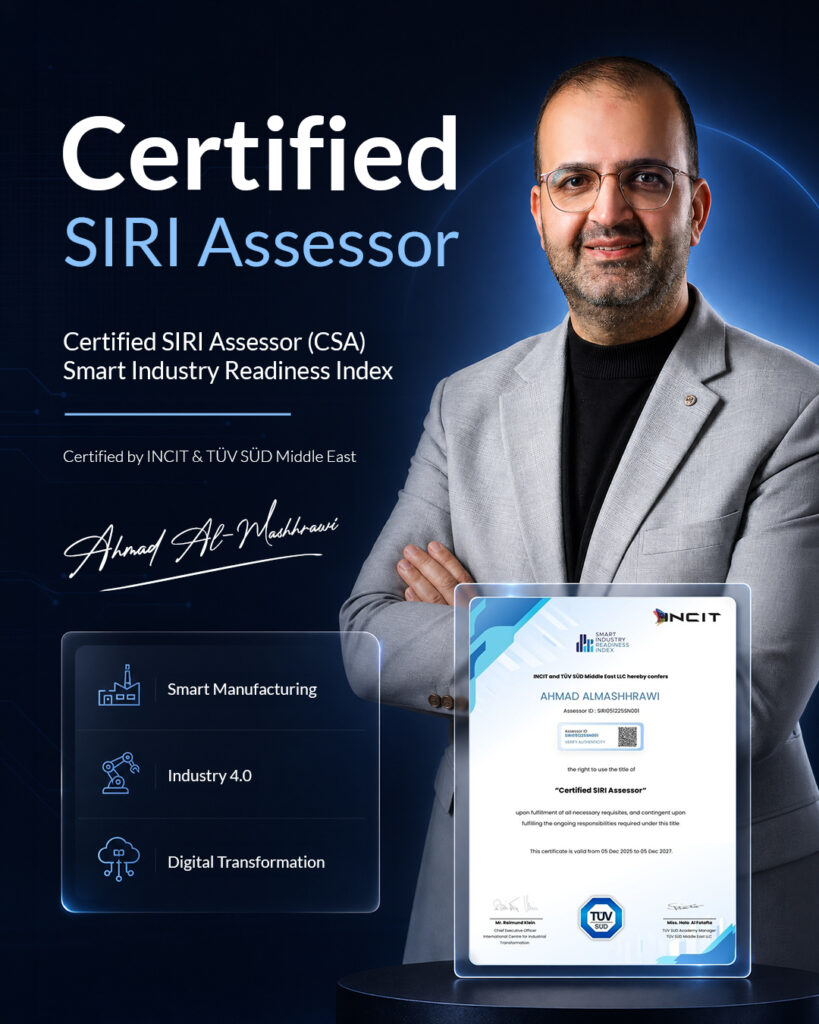
Automera delivers Smart Industry Readiness Index (SIRI) assessments through a team of certified assessors, helping factories measure their digital maturity and set clear, methodical priorities for transformation.
The team is led by Ahmad Al-Mashhrawi, industrial automation consultant and Certified SIRI Assessor (CSA). Each assessment takes a comprehensive look at the factory across three dimensions: process, technology, and organization to surface strengths, uncover digital transformation gaps, and pinpoint where investment and development should be prioritized.
But Automera doesn’t stop at assessment. Our in-house team builds Industry 4.0 integration solutions and software ourselves, which means we can carry you straight from assessment into execution connecting your systems, processes, and data into one cohesive digital ecosystem, tailored to your facility’s specific needs.
The result: a SIRI assessment that goes beyond a snapshot of where your factory stands today. It gives leadership a clear, actionable roadmap toward Industry 4.0 built around your operations, your goals, and your actual priorities.
Start your digital transformation journey with clarity. Book a SIRI assessment with Automera’s certified team, understand your factory’s maturity level, define what to invest in next, and build a practical roadmap to Industry 4.0 with a partner who stays with you from assessment through implementation and integration.